Check it out! There is a great book for more information to help answer the consumer's questions. It is organized by each disease and the vaccine that is used to prevent it. Information is given about what the disease is, how it is treated, the seriousness of it, the vaccine schedule, what is in the vaccine and much, much more. Check it out!
The Vaccine Book, Making the Right Decision for Your Child by Robert W. Sears
Monday, March 23, 2009

Sunday, March 15, 2009
How did this begin and why is it important?

Vaccinations do save lives. This is not to say that an immunized child will not contract a disease and perhaps die, but that the odds have decreased greatly due to vaccinations.
The history of vaccines dates back to the late 1700's when the smallpox virus was rampant and claiming many lives. The smallpox vaccine was created by a British doctor, Edward Jenner. In the 1800 Louis Pasteur created a vaccine against rabies and began to see the need for a vaccination for other diseases. This was just the beginning. Now, in 2009, we have vaccinations from many diseases that used to claim the lives of thousands yearly.
A few statistics:
-Before the polio vaccine, around 13,000 to 20,000 children in the U.S. alone contracted the disease and many died from that.
-Pertussis, or whooping cough, resulted in about 9000 deaths per year prior to the vaccination.
-Before the chicken pox vaccination (1995), there were four million cases, 11,000 hospitalizations, and 100 DEATHS per year.
-The CDC reports that <1% of US children do not get vaccinations by 19-35 months.
Through the years more and more diseases have vaccinations for them and this has helped to eradicate so many terrible diseases. Studies have been conducted for years to ensure the safety and efficacy of vaccinations.
http://www.chiro.org/LINKS/FULL/Infant_Vaccination_Controversy.shtml
http://www.cdc.gov/vaccines/
http://immunizationinfo.org/
Friday, March 13, 2009
2009 Immunization Schedule
The CDC provides a schedule for vaccinations from birth to adulthood every year.
Print your pocket size copy here.
Print your pocket size copy here.
Thursday, March 12, 2009
So, what really is the controversy??
You may be asking yourself, why is this topic controversial. Vaccinations are something many people take forgranted and have never considered the implications that could be associated with innoculating a child. Vaccines are generally safe, however, there are occasional adverse events that can occur with giving a vaccination. The most common are probably auto-immune reactions that occur as a result of introducting a foreign substance to the body. There have been questions regarding certain diseases and a possible link to vaccinations, but these have proved to be unrealated. An example of this is the question many have asked regarding the relationship of autism and vaccines. There have not been any significant findings in regards to this. For most families the risk of disease that is associated with not vaccinating a child involves much more risk than the chance that your child will experience an adverse reaction!
Tuesday, March 10, 2009
Media coverage on vaccine
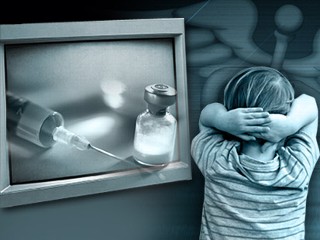
Concerns over a link between vaccines and autism have become commonplace among some members of the public and within the media itself.
On February 12th, 2009, CNN's Campbell Brown reported on the immunization controversy indicating that the only cause for concern is the one posed by parents opting out of vaccine programs. In another news, Newsweek's Sharon Begley wrote an article entitled "Anatomy of a Scare." In this article she states that the entire controversy was built on a house of cards that has now been demolished. Yet in another media coverage, CBS news reported on a special courts ruling in three cases that showed no link between the MMR vaccine and autism. Following is a video of this news coverage:
http://www.cbsnews.com/video/watch/?id=4798772n
http://www.cnn.com/2009/HEALTH/02/13/campbell.brown.vaccine.response/
Who is involved?
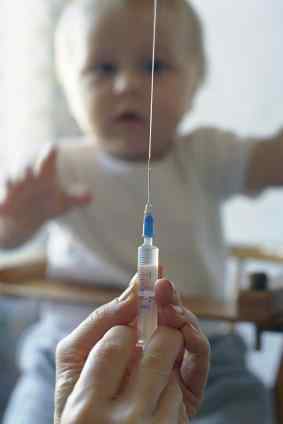
Vaccines are considered the most important medical breakthrough of the past century and save millions of lives. Yet vaccinating children has become a controversial issue with alleged links to autism, sudden infant death syndrome, and many other health problems. This controversy has lead a growing number of parents to question the value of vaccines, delaying, even refusing to have their children vaccinated. It is no wonder that this issue not only involves the consumer but also the drug companies that manufacture vaccines and the governmental agencies that regulate them.
As the debate and controversy continues, the CDC and other public health officials are concerned that a new generation of children will be at risk of deadly diseases if confidence in the safety of vaccines are lost and they don't receive recommended shots. In order to reduce these concerns, the CDC took measures and urged vaccine manufacturers to reduce or eliminate thimerosal (a type of mercury found in vaccines) from their vaccination preparation. By 2000, thimerosal was removed from all vaccines except the flu vaccine. The federal government also found the National Vaccine Injury Compensation Program, in the late 1980s, to build confidence in consumers and manufacturers by allowing awards to those children that have been injured by vaccines and by protectin vaccine manufacturers from being sued.
As the debate and controversy continues, the CDC and other public health officials are concerned that a new generation of children will be at risk of deadly diseases if confidence in the safety of vaccines are lost and they don't receive recommended shots. In order to reduce these concerns, the CDC took measures and urged vaccine manufacturers to reduce or eliminate thimerosal (a type of mercury found in vaccines) from their vaccination preparation. By 2000, thimerosal was removed from all vaccines except the flu vaccine. The federal government also found the National Vaccine Injury Compensation Program, in the late 1980s, to build confidence in consumers and manufacturers by allowing awards to those children that have been injured by vaccines and by protectin vaccine manufacturers from being sued.
Monday, March 9, 2009
The hot topic
Childhood vaccination has become an increasingly debated topic. There are two main views of childhood vaccines: those in favor of current vaccination policies and those expressing concerns with these policies. Parents often raise questions and concerns such as: "Vaccine-preventable diseases have been eliminated in my country; therefore, my child does not need the vaccines" and "Vaccines can cause harmful side effects, possibly some we don't even know about yet." Some question the safety of vaccines, as well as their effectiveness. Many studies have associated certain vaccines with diseases like autism and asthma; however, nothing has yet been confirmed. Although vaccines can have risks, there are proven benefits: they can save your child's life, protect others you care about, as well as save time and money for your family in the future. There is no way to precisely predict how an individual will react to a certain vaccine. Most side effects are minor, including a sore arm, fatigue or a low grade fever. Please visit the Center for Disease Control and Prevention website for a list of possible side effects from certain vaccines.
Another common misconception about vaccines is that because certain diseases are so rarely seen, what is the need to have children vaccinated. In the U.S., vaccines have significantly reduced, if not eliminated, certain diseases that used to kill or harm many infants and children. Unfortunately, the viruses and bacteria that cause these vaccine-preventable diseases still exist. This can lead to un-vaccinated persons to catching these horrible diseases. The more people who are vaccinated decreases the chance of anyone else being exposed to the vaccine-preventable diseases. The current number of hospitalizations and deaths from vaccine-preventable diseases are at an all time low. It is true that preventing a disease is better than treating a disease, however, what if certain vaccines can cause serious side effects, or worse, another disease? The most important issue is to be fully informed, knowing the risks and the benefits, about each vaccination.
http://www.who.int/immunization_safety?aefi/immunization_misconceptions/en/index.html
http://www.immunize.org/catg.d/p4017.pdf
http://pus.sagepub.com/cgi/content/abstract/17/2/231
http://health.state.ga.us/pdfs/prevention/immunization/CDCFAQs.pdf
http://kidshealth.org/parent/general/body/fact_myth_immunizations.html
http://pus.sagepub.com/cgi/content/abstract/17/2/231
http://health.state.ga.us/pdfs/prevention/immunization/CDCFAQs.pdf
http://kidshealth.org/parent/general/body/fact_myth_immunizations.html
Who Should Care?

Vaccines are important for all of us: infants, children, adults, employees, professionals, etc. As soon as we are born, we are bombarded with shot after shot, vaccine after vaccine. Most children receive approximately 22 immunizations before the age of 6. Into childhood and sometimes adulthood, we are still getting immunized. However, if this wasn't the case, diseases that are no longer common would start to be more prevalent. Deadly childhood diseases, like the measles, would be spread throughout the population. The viruses and bacteria that cause these deadly diseases still exist; however, the diseases are not as common due to vaccinations. For each child that is vaccinated, the lesser the chance of unwanted diseases spreading.
Also, the World Health Organization continuously researches for new vaccine development; therefore, we all need to be continously aware of these new immunizations. For instance, in 2006 the HPV Vaccine was approved for females 9-26 years of age to help prevent the types of genital human papillomavirus (HPV). HPV causes most cases of cervical cancer and genital warts. Therefore, this vaccine is extremely important for young girls to recieve.
It is standard for everyone to be vaccinated in one way or another, whether it be for children before they can attend school to nurses before they can work in the hospital. Immunizations not only help protect individuals, but also the health of our communities. They help protect those individuals that can not be vaccinated for health reasons or do not have adequate responses to vaccinations. Therefore, all consumers and professionals should care about vaccinations.
http://www.curezone.com/art/read.asp?ID-12&db=12&Co=735
http://www.cdc.gov/vaccines/vac-gen/importance.htm
http://www.fda.gov/bbs/topics/NEWS/2006/NEW01385.html
http://www.cdc.gov/std/Hpv/STDFact-HPV-vaccine.htm
Also, the World Health Organization continuously researches for new vaccine development; therefore, we all need to be continously aware of these new immunizations. For instance, in 2006 the HPV Vaccine was approved for females 9-26 years of age to help prevent the types of genital human papillomavirus (HPV). HPV causes most cases of cervical cancer and genital warts. Therefore, this vaccine is extremely important for young girls to recieve.
It is standard for everyone to be vaccinated in one way or another, whether it be for children before they can attend school to nurses before they can work in the hospital. Immunizations not only help protect individuals, but also the health of our communities. They help protect those individuals that can not be vaccinated for health reasons or do not have adequate responses to vaccinations. Therefore, all consumers and professionals should care about vaccinations.
http://www.curezone.com/art/read.asp?ID-12&db=12&Co=735
http://www.cdc.gov/vaccines/vac-gen/importance.htm
http://www.fda.gov/bbs/topics/NEWS/2006/NEW01385.html
http://www.cdc.gov/std/Hpv/STDFact-HPV-vaccine.htm
Saturday, March 7, 2009
Why we should be educated
Many Americans spend a great deal of time researching numerous consumer products before purchasing them. We look at quality, price, longevity, resale value and the reputation of the company that has produced the product. With the rising cost of health care and the diversity of health plans and coverages, it has become increasingly imperative that consumers start applying the same research techniques that are used in other products to the the health care industry. After all, our health is not a disposable good but one with immeasurable value.
Consumers should be even more involved in their care when it comes to medicine and topics that are at the heart of nationwide controversy like childhood vaccinations. Many young families have trusted the mandates to have their children vaccinated according to the recommended schedules only to have their children suffer from serious side effects and sometimes death. Even though the majority of children have little to no adverse reactions, the ones who have suffered from the vaccinations are at the core of the controversy.
The responsibility lies in the hands of many groups including the consumer. Education is the key to knowing if vaccinations are right for your family. The decision not to vaccinate your child should be carefully examined after gathering all the information. Research can be done online, at the library, by reading recent studies that have been done or most of all by talking to a trusted physician. Consumers should be ready to walk into a doctor's visit with questions, concerns and an open mind regarding their child's care. Following is a list of potential questions that can be asked of the health care team.
1. Are harmful agents like mercury and thimerasol still used in vaccines today?
2. Does my child have to receive vaccines according to the schedule or can I choose?
3. Can I reject some vaccines and choose to do others?
4. What are the chances of my child having a serious or fatal side effect?
5. How quickly would I see one of the serious side effects and can my child be treated quickly enough to not suffer long term effects?
6. In my state that I live, can my children still go to school without these vaccines?
It is not only up to the consumer to educate themselves but also the health care providers like doctors and nurses who should be up to date on the current statistics, studies being done and any new changes that have taken place in the vaccine formulations. Even though there are many physicians who are opposed to vaccines, studies have shown that most physicians are in support of them and will encourage parents to have their children vaccinated. The physicians and nurses on either side must be able to provide current and accurate information in order to help consumers make informed decisions. There are risks on both sides of this issue and it is up to consumers and health professionals to work together to protect individual children as well as society.
Consumers should be even more involved in their care when it comes to medicine and topics that are at the heart of nationwide controversy like childhood vaccinations. Many young families have trusted the mandates to have their children vaccinated according to the recommended schedules only to have their children suffer from serious side effects and sometimes death. Even though the majority of children have little to no adverse reactions, the ones who have suffered from the vaccinations are at the core of the controversy.
The responsibility lies in the hands of many groups including the consumer. Education is the key to knowing if vaccinations are right for your family. The decision not to vaccinate your child should be carefully examined after gathering all the information. Research can be done online, at the library, by reading recent studies that have been done or most of all by talking to a trusted physician. Consumers should be ready to walk into a doctor's visit with questions, concerns and an open mind regarding their child's care. Following is a list of potential questions that can be asked of the health care team.
1. Are harmful agents like mercury and thimerasol still used in vaccines today?
2. Does my child have to receive vaccines according to the schedule or can I choose?
3. Can I reject some vaccines and choose to do others?
4. What are the chances of my child having a serious or fatal side effect?
5. How quickly would I see one of the serious side effects and can my child be treated quickly enough to not suffer long term effects?
6. In my state that I live, can my children still go to school without these vaccines?
It is not only up to the consumer to educate themselves but also the health care providers like doctors and nurses who should be up to date on the current statistics, studies being done and any new changes that have taken place in the vaccine formulations. Even though there are many physicians who are opposed to vaccines, studies have shown that most physicians are in support of them and will encourage parents to have their children vaccinated. The physicians and nurses on either side must be able to provide current and accurate information in order to help consumers make informed decisions. There are risks on both sides of this issue and it is up to consumers and health professionals to work together to protect individual children as well as society.
Friday, March 6, 2009
Risk from diesease vs. risk from vaccines
The World Health Organization put together a chart to compare the risks from the vaccine-preventable disease to the risk from the actual vaccine.
| DISEASE | VACCINES |
| Measles | MMR |
| Pneumonia: 1 in 20 | Encephalitis or severe allergic reaction: 1 in 1 million |
| Encephalitis: 1 in 2 000 | |
| Death: 1 in 3 000 in industrialized countries. As much as 1 in 5 in outbreaks in developing countries | |
| Mumps | |
| Encephalitis: 1 in 300 | |
| Rubella | |
| Congenital Rubella Syndrome: 1 in 4 (if woman becomes infected in early pregnancy) | |
| Diphtheria | DTP |
| Death: 1 in 20 | Continuous crying, then full recovery: 1 in 100 |
| Tetanus | Convulsions or shock, then full recovery: 1 in 1 750 |
| Death: 25-70 in 100 overall. 10-20 in 100 with good intensive care management | Acute encephalopathy: 0-10.5 in 1 000 000 |
| Pertussis | Death: None proven |
| Pneumonia: 1 in 8 | |
| Encephalitis: 1 in 20 | |
| Death: 1 in 200 | |
Monday, March 2, 2009
FYI: Who should NOT get vaccinated
This poses an interesting question. Primarily, all consumers should be vaccinated to prevent the spread or outbreak of vaccine-preventable diseases. However, the CDC provides information on who should not get vaccinated with certain vaccines. Each immunization has separate limitations on who should not be vaccinated; however, most suggest those people who have serious allergic reactions to certain products, like yeast or gelatin, or an allergic reaction to previous doses, should be careful.
Visit this website for detailed information.
Visit this website for detailed information.
What the experts are saying...

Before we had vaccines, thousands of children were affected by childhood diseases. From measles, mumps, and whooping cough, and other diseases, they were left with disabilities such as deafness, blindness, brain damage and even death. According to the CDC, vaccines have drastically reduced these casualties.
When it comes to their children’s shots, a lot of people have dropped the ball. A prime example of the repercussions of their decisions is that in 1983 the number of measles cases was fewer than 1500 cases. However, between 1989 and 1991 there was an outbreak of more than 55,000 cases and 132 deaths (mostly in unvaccinated babies and toddlers). (CDC report)
Our grandparents might remember the 1952 epidemic of Polio when more than 20,000 people were afflicted with Polio. Polio can progress to paralysis of the lower limbs and chest which can lead to death. What’s more, there is no cure for Polio. With the invention of the Polio vaccine, incidences of the disease has dropped to less than 10 cases per year. (According to the CDC and the Pan-American Health Org.) The risk of contracting Polio from receiving the vaccine is 1 in 1.5 million. Another example of what the vaccine has accomplished for us is the German measles vaccine. Before we started receiving the vaccination in 1969, around 20,000 babies were born with severe birth defects—heart disease, blindness, hearing loss, learning problems, and some were even lost to miscarriage. All this was due to the mother’s being exposed to the disease while pregnant.
According to the CDC, 40 – 50% of children under age 2 haven’t completed the recommended infant immunizations. Public health officials are worried that diseases that once were nearly wiped out are on the rise again. In 1962 before the measles vaccine was introduced, there were 500,000 cases reported (400 being fatal). In 1963 this number dropped to 1493. In 1989 the CDC reported seeing a rise in the number of measles cases, especially in Los Angeles, Chicago and Dallas. There have been reports of children experiencing seizures and even permanent brain damage after receiving a pertussis vaccine. JAMA (Journal of the American Medical Association) studied the records of 38,000 children that got the vaccine and found no evidence to support these accusations. The accusations that the DTP vaccine is tied to sudden infant death syndrome, is unfounded according to the CDC. According to the National Academy of Sciences there is a possibility of some children having an anaphylaxis reaction to the following vaccines: diphtheria, tetanus, hepatitis, measles-mumps-rubella. Also, some of the vaccines can actually cause the disease it was supposed to prevent. One of the big fears of vaccines is that they might be the cause of Autism. It’s mostly accredited to the mercury in some of the vaccines. They’ve shown over a 60% increase in the number of Autism cases. Dr. Bernadine Healy was the former head of the National Institute of Health. She believes that public health officials need to research these accusations further and find a solution. All this information can be further researched through the Alt HealthWatch database.
When it comes to their children’s shots, a lot of people have dropped the ball. A prime example of the repercussions of their decisions is that in 1983 the number of measles cases was fewer than 1500 cases. However, between 1989 and 1991 there was an outbreak of more than 55,000 cases and 132 deaths (mostly in unvaccinated babies and toddlers). (CDC report)
Our grandparents might remember the 1952 epidemic of Polio when more than 20,000 people were afflicted with Polio. Polio can progress to paralysis of the lower limbs and chest which can lead to death. What’s more, there is no cure for Polio. With the invention of the Polio vaccine, incidences of the disease has dropped to less than 10 cases per year. (According to the CDC and the Pan-American Health Org.) The risk of contracting Polio from receiving the vaccine is 1 in 1.5 million. Another example of what the vaccine has accomplished for us is the German measles vaccine. Before we started receiving the vaccination in 1969, around 20,000 babies were born with severe birth defects—heart disease, blindness, hearing loss, learning problems, and some were even lost to miscarriage. All this was due to the mother’s being exposed to the disease while pregnant.
According to the CDC, 40 – 50% of children under age 2 haven’t completed the recommended infant immunizations. Public health officials are worried that diseases that once were nearly wiped out are on the rise again. In 1962 before the measles vaccine was introduced, there were 500,000 cases reported (400 being fatal). In 1963 this number dropped to 1493. In 1989 the CDC reported seeing a rise in the number of measles cases, especially in Los Angeles, Chicago and Dallas. There have been reports of children experiencing seizures and even permanent brain damage after receiving a pertussis vaccine. JAMA (Journal of the American Medical Association) studied the records of 38,000 children that got the vaccine and found no evidence to support these accusations. The accusations that the DTP vaccine is tied to sudden infant death syndrome, is unfounded according to the CDC. According to the National Academy of Sciences there is a possibility of some children having an anaphylaxis reaction to the following vaccines: diphtheria, tetanus, hepatitis, measles-mumps-rubella. Also, some of the vaccines can actually cause the disease it was supposed to prevent. One of the big fears of vaccines is that they might be the cause of Autism. It’s mostly accredited to the mercury in some of the vaccines. They’ve shown over a 60% increase in the number of Autism cases. Dr. Bernadine Healy was the former head of the National Institute of Health. She believes that public health officials need to research these accusations further and find a solution. All this information can be further researched through the Alt HealthWatch database.
Sunday, March 1, 2009
Guide to Immunizations
The Center for Disease Control and Prevention provides a Parents' Guide to Childhood Immunizations.
You can print your copy here.
You can print your copy here.
NNii
The National Network for Immunization Information is a great website for helpful information regarding immunizations. You can find information about all vaccines and the diseases they prevent, frequently asked questions about immunizations and much, much more!
Subscribe to:
Posts (Atom)
